


Last Updated: November 5, 2026
Quick Summary
Portable craft kits for airplane travel work when they pass three tests: security allows them, the pieces stay contained, and the project fits a tray table. Choose compact, self-contained kits built around one small project, and pack shears, rotary cutters, and liquid adhesives in checked bags.
- Scissors under 4 inches from the pivot point, knitting needles, crochet hooks, and embroidery needles are generally allowed in carry-on bags.
- Fabric shears over the limit, rotary cutters, spare blades, and liquid adhesives belong in checked bags.
- Match kids’ projects to attention span: ages 3-5 need large precut shapes and constant supervision.
- Compare kits on packed size, weight, mess potential, setup time, and pause-ability before buying.
- Build a DIY kit with one zippered pouch, one project, precut materials in a labeled clear bag, and a needle holder.
Table of Contents
- Portable Craft Kits for Airplane Travel: What Actually Works in a Cabin
- TSA Rules for Craft Supplies: What Goes in the Carry-On and What Stays Home
- Easy Crafts to Do on a Plane Without Losing a Single Piece
- Travel Crafts for Kids: Age Ranges, Attention Spans, and Supervision
- Portable Craft Kits for Airplane Travel Adults Will Actually Finish
- DIY Portable Craft Kits for Airplane Travel: Build Your Own From What You Own
- Frequently Asked Questions
Portable Craft Kits for Airplane Travel: What Actually Works in a Cabin
Portable craft kits for airplane travel succeed or fail on three things: whether security lets them through, whether the pieces stay contained, and whether the project fits on a tray table. At Artsi2, we build our kits around those constraints because a craft you cannot open at 30,000 feet is just weight in your bag.
The market reflects that appetite. Business Research Insights’ craft kits market analysis puts the global craft kits and projects market at roughly USD 4.38 billion in 2026, and a large share of that demand comes from people who want something to do with their hands away from a screen.
Below, we break down what clears security, what survives a confined cabin, and which kits adults and kids actually finish.
The Three Rules Every Carry-On Kit Must Pass
A carry-on craft kit has to clear three tests before it earns space in your bag.
Rule one: it passes security. Nothing sharp, nothing liquid, nothing that looks ambiguous on a scanner.
Rule two: it stays contained. A kit that spills small pieces under the seat in front of you is a kit you will never open again.
Rule three: it fits the space. Tray tables are small, and your neighbor’s elbow is closer than you think.
Most kits fail at least one. The ones that pass all three tend to be compact, self-contained, and built around a single small project rather than a broad assortment.
TSA Rules for Craft Supplies: What Goes in the Carry-On and What Stays Home
The short answer: scissors under 4 inches from the pivot point, knitting needles, crochet hooks, and embroidery needles are generally allowed in carry-on bags, but the final call belongs to the screening officer. The TSA’s official rules on sharp objects list permitted items, and the agency is explicit that officers may restrict anything they consider a threat.
That caveat matters. A needle your kit includes is usually fine. A full sewing kit with shears is not. Pack the following in your checked bag instead:
- Fabric shears and scissors over the limit
- Seam rippers with long blades
- Rotary cutters and spare blades
- Any liquid adhesive, paint, or solvent
Watch out: printing the TSA page and waving it at a checkpoint does not settle a disagreement. If an item is questionable, check it or leave it home.
Easy Crafts to Do on a Plane Without Losing a Single Piece
The best easy crafts to do on a plane are the ones built around precut pieces and a single contained workspace. Nothing rolls, nothing scatters, and nothing needs a table you do not have.
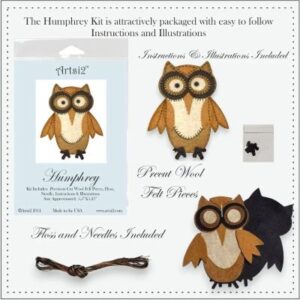
Contents of the Humphrey Kit
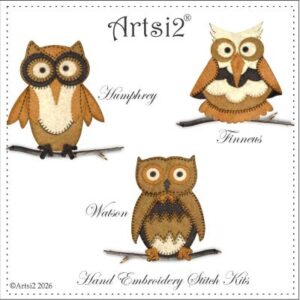
Felt applique and hand embroidery fit that description well. Our hand embroidery kits arrive individually packed with precut wool felt pieces, floss, needles, a stitch glossary, and illustrated instructions. For a fabric craft, our no-sew quilt kits use a precut board where fabric tucks into the grooves, so no sewing is needed. The No-sew-quilt kits are not suggested as a craft to do on a plane.
Travel Crafts for Kids: Age Ranges, Attention Spans, and Supervision
Travel crafts for kids work best when the project matches the child’s attention span, not their age on paper. A four-year-old and a nine-year-old need very different things from a flight.
Here is a general guide to matching projects to ages:
| Age range | Best project type | Typical attention span | Supervision needed |
|---|---|---|---|
| 3-5 | Large precut shapes, no needles | 10-15 minutes | Constant |
| 7-10 | Simple tuck-and-place fabric boards | 20-30 minutes | Frequent check-ins |
| 9-12 | Hand embroidery with blunt-tip needles | 30-45 minutes | Occasional |
| Teens and adults | Full stitch kits, cross-stitch | 45-90 minutes | Minimal |
Needles are the dividing line. Anything with a sharp point belongs with older kids or a supervising adult. For a wider spread of options suited to children, browse our crafts for kids collection.
Portable Craft Kits for Airplane Travel Adults Will Actually Finish
Adults finish projects that have a visible endpoint. A kit with a defined design, all materials included, and a realistic completion window beats an open-ended assortment every time.
Here is how the main kit types stack up for cabin use:
| Kit type | Packed size (approx.) | Weight | Mess potential | Setup time | Pause-ability |
|---|---|---|---|---|---|
| Hand embroidery kit (precut felt) | Paperback book | 4-6 oz | Low (contained pieces, thread snippets) | Under 1 minute | High, zip pouch, leave needle in felt |
| No-sew quilt board kit | Project bin to fit the project | 12-15 oz | High – paper pattern pieces will be discarded after use. | 10 minutes | High, board holds fabric in place |
| Cross-stitch kit | Small box | 5-7 oz | Low (small scissors, floss) | 1-2 minutes | Medium, loose floss needs winding |
| Knitting or crochet project | Stuff sack | 8-12 oz | Low (yarn ball, no loose pieces) | Under 1 minute | Medium, live stitches need securing |
| Paper craft or origami | Flat envelope | 2-4 oz | Medium (scraps, small folds) | Under 1 minute | Low, once folded, done |
Our adult craft kit line is built for exactly this: individually packed kits with all materials included.
What most guides miss is that portability is not just size. It is whether you can put the project down mid-stitch, zip it closed, and pick it up after the beverage cart passes.
Watch out: a kit that looks compact online may still be bulkier than expected.
DIY Portable Craft Kits for Airplane Travel: Build Your Own From What You Own
A DIY portable craft kit is a small, self-contained project you assemble yourself from supplies already at home.
Start with a containment system. A single zippered pouch works for the core project, but small pieces need a second layer.
Build yours with this checklist:
- One zippered pouch, roughly the size of a paperback
- One project only, not three
- Precut or pre-sorted materials in a labeled clear bag
- A needle holder or magnet for anything sharp
- Printed instructions folded to pocket size
- A small scrap bag for offcuts and thread ends
- A tray-table-sized work surface
For security screening, keep the kit in an outside pocket of your carry-on so you can pull it out quickly if asked.
Between sessions, the key is to close the loop: put the work-in-progress back in the zippered pouch, seal the clear bag of loose pieces, and stow the whole kit in the seat-back pocket.
If assembling from scratch feels like more work than the flight, our DIY craft kits for adults offer a ready-made starting point.
Frequently Asked Questions
Are embroidery kits practical for airplane travel?
Yes, with one caveat: needles. Hand embroidery stitch kits with precut wool felt pieces, floss, and a stitch glossary are a practical option for travel. The needles are the issue. TSA permits small hand-sewing needles in carry-on bags, but a needle can still be flagged at an agent’s discretion, so pack needles in a case rather than loose in a pouch, and put a seam ripper or small scissors in checked luggage.
How do I pack craft supplies in a carry-on without losing pieces?
Keep each project in its own pouch so a dropped piece stays contained. Keep the kit flat and compact so it is easy to stow during the flight. Anything liquid, including fabric paint and glue, has to follow the 3-1-1 liquids rule.
What are easy screen-free crafts for kids on a flight?
The ones with the fewest loose parts and the shortest setup. Precut felt kits can work on a tray table. Match the project to the age: toddlers do best with chunky, no-small-parts activities and a supervising adult, while tweens can handle embroidery and multi-step kits. Bring one project per child plus a backup, since attention spans on a plane run shorter than at home.
Will a craft kit really fit in a carry-on, or is ‘portable’ just marketing?
It depends on the kit’s format, so check the packed dimensions before buying. Check the packed dimensions of any kit before you buy, since sizes vary by product format. A practical test: if the kit does not fit in a quart-size pouch or lie flat against a book, it will be awkward on a tray table.
The difference between a craft that entertains you for a whole flight and one that stays in your bag comes down to preparation. Artsi2 builds USA-made kits with precut wool felt pieces, individually packed components, and no-sew quilt boards that teach color and pattern coordination as you go. Whether you want a compact hand-sewing project or a needle-free board for a child, our kits are designed to travel. Get started with Artsi2 and open a project at cruising altitude.
