


Last Updated: November 1, 2026
Quick Summary
Relaxing hobbies for non creative people work because creativity is not the same as being artistic: following a pattern, sorting colors, and watching a shape come together are skills anyone can practice. Easy options include jigsaw puzzles, sudoku, adult coloring books, simple knitting, houseplant care, and solitaire with a real deck. Start with one small session and judge the process, not the output.
- A poll from the American Psychiatric Association found 46% of Americans use creative activities to relieve stress or anxiety.
- A 2025 review by M. Cleary and colleagues found hobbies can support personal growth, reduce stress, and foster social connections.
- The easiest hobbies for adults share three traits: no special skills, low commitment, and a short setup.
- Start jigsaw puzzles with 500 pieces or fewer, sorting edges first and then by color.
- Do not buy gear until session three, and decide whether to keep a hobby after three sessions.
Table of Contents
- Why Relaxing Hobbies Work Even If You Do Not Feel Creative
- Easy Hobbies for Adults Who Want Something Simple to Start
- Screen-Free Hobbies for Adults That Fit a Busy Week
- Hobbies for Stress Relief: Matching the Activity to Your Energy and Budget
- Easy Crafts for Beginners Who Do Not Identify as Crafty
- Pick One Kit and Give Yourself an Hour This Weekend
Why Relaxing Hobbies Work Even If You Do Not Feel Creative
Relaxing hobbies for non creative people are not a contradiction. You do not need an artistic bone in your body to benefit from making something, and the research backs that up.

Many adults insist they “aren’t crafty” and still want something to do with their hands. The good news: the barrier is lower than most people assume.
Here is the distinction that matters: being creative is not the same as being artistic.
What the Research Actually Shows About Hobbies and Stress
A 2025 review by M. Cleary and colleagues in the Journal of Psychosocial Nursing and Mental Health Services found that hobbies can support personal growth, reduce stress, and foster social connections. Structured leisure gives your attention somewhere to land.
Easy Hobbies for Adults Who Want Something Simple to Start
The easiest hobbies for adults share three traits: no special skills, low commitment, and a short setup. If an activity needs a dedicated room or a shopping trip before you begin, it usually does not survive past week two. You can explore activities for adults at home to find more simple options.
- Jigsaw puzzles (500 pieces or fewer to start): sort edges first, then by color. First session: dump the pieces, flip them face-up, and build the border. Stop whenever you want.
- Sudoku and crossword books: cheap, portable, and easy to pick up for ten minutes. First session: do one easy puzzle, not the hardest one in the book.
- Adult coloring books: the lines do the hard work for you. First session: pick one page, use colored pencils rather than markers, and fill one small area.
How to Choose by Energy, Time, Budget, and Setup
Before you pick from the list, answer four questions honestly.
- Energy: Winding down at night (low) or a weekend afternoon (moderate)? Low-energy picks: puzzles, coloring, solitaire, reading. Moderate: walking, cooking, repotting plants.
- Time: 10-15 minute gaps or a protected hour? Short-gap picks: sudoku, a crossword, a few rows of knitting. Hour-long picks: a puzzle session, a coloring page, a small craft.
- Budget: Many of these can be started with little or no spending.
Accessibility and Living-Situation Notes
Not every hobby fits every home. A few practical adjustments:
- Small spaces or shared homes: puzzles on a folding board can be moved intact; coloring books and sudoku need only a lap tray; knitting stores in a single bag.
- Limited mobility: seated options include puzzles, coloring, knitting, solitaire, and reading. Walking can be swapped for seated stretching.
- Shared or noisy households: puzzles, reading, and knitting are quiet and can be done with headphones on.
Puzzles, Word Games, and Brain Games
Puzzles are the most forgiving entry point on this list. There is no wrong way to sort a jigsaw, and you can walk away mid-puzzle without ruining anything.
Puzzles give your hands and eyes a job while your mind settles. A reasonable first goal is one puzzle or one page of sudoku per sitting, not a personal best.
Reading, Podcasts, and Listening Activities
Reading counts as a hobby, and so does listening. A paperback, an e-reader, or a podcast queue all provide screen-free downtime that fits into gaps in your day. Match the format to your energy: dense nonfiction when you are alert, fiction or audio when you are tired.
Listening while doing something with your hands, like folding laundry, doubles up on relaxation without adding a new time block.
Screen-Free Hobbies for Adults That Fit a Busy Week
Screen-free hobbies for adults work best when they fit into time you already have rather than demanding new time. A twenty-minute window after dinner is enough for most of the activities below.
Simple No Sew Quilt Patterns: A Beginner’s Guide to Easy Fabric Crafts
Walking, Gentle Exercise, and Cooking as Low-Effort Pastimes
Walking is the most accessible hobby on this list. No equipment, no membership, no learning curve.
Cooking works the same way when you lower the stakes. Pick one new recipe a week rather than planning a full menu, and keep it to five ingredients or fewer.
Gentle exercise rounds out the category. Stretching, light yoga, or a slow bike ride all count.
Other Screen-Free Pastimes Worth Trying
Beyond walking and cooking, several low-setup activities fit a busy week:
- Audio while doing chores: pair a podcast or audiobook with folding laundry, washing dishes, or tidying.
- Board and card games with household members: a single deck of cards or a simple board game is screen-free and social. First step: play one round, not a tournament.
- Journaling by hand: a few lines about the day, no format required. This is not creative writing, it is a place to put a thought so it stops looping.
Setting Realistic Expectations
A hobby will not fix a hard week, and it is not a substitute for professional care if you are struggling. What structured leisure can do is give your attention somewhere to land for a stretch of time.
How to Try a Hobby Without Turning It Into Another Obligation
A low-pressure trial method keeps leisure from becoming a second job:
- Pick one activity and one small version of it. One recipe, one walk route, one puzzle.
- Schedule a single session, not a routine. One evening this week, twenty minutes.
- Judge the process, not the output. Ask whether the time felt calming, neutral, or stressful.
- Decide after three sessions. If it still feels like a chore, drop it without guilt. If it feels neutral-to-good, keep it as an option rather than a commitment.
- Do not buy gear until session three. Most of these activities need nothing beyond what you already own.
Hobbies for Stress Relief: Matching the Activity to Your Energy and Budget
Hobbies for stress relief are not one-size-fits-all. The right pick depends on how much energy, time, money, and setup you can realistically commit. Use this table to narrow the field before you buy anything.
| Hobby | Energy Needed | Time per Session | Setup | Best For |
|---|---|---|---|---|
| Puzzles and sudoku | Low | 10-30 min | Minimal | Winding down at night |
| Reading and podcasts | Low | 15-60 min | None | Commutes and quiet evenings |
| Walking | Moderate | 20-40 min | None | Clearing your head |
| Cooking a new recipe | Moderate | 30-60 min | Kitchen basics | Weekend afternoons |
| Simple crafts | Low | 30-60 min | A table and good light | Hands-on relaxation |
The pattern is clear: the lower the setup, the more often you will actually do it. Most of these activities cost very little to start, and the ones that require materials are worth trying in a small first version before you invest further.
Easy Crafts for Beginners Who Do Not Identify as Crafty
Easy crafts for beginners work when the project removes the decisions that trip people up. If a kit pre-cuts the pieces and tells you where each one goes, you are not being tested on artistic ability.
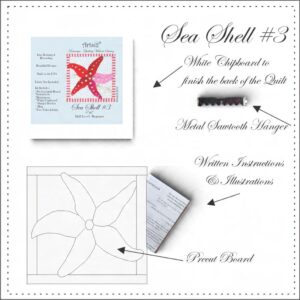
This is where Artsi2 kits fit naturally. Each kit includes precut a quilt board and easy-to-follow instructions, and the no-sew quilt boards make the project approachable without a sewing machine.
If you have never done quilting and worry a kit will end up looking like a mess, start with a small design. You can also browse 6”X6” Quilting Without Sewing Crafts made for absolute beginners. You can browse easy beginner crafts for adults to pick a first project.
What a First Craft Session Should Look Like
Set aside one hour, clear a table, and open the kit before you sit down. Determine what fabrics will be used and where. Work in daylight if you can, since good light makes color matching much easier.
Expect to finish a small project in one or two sittings. If you do not finish, leave it out rather than packing it away.
Pick One Kit and Give Yourself an Hour This Weekend
Pick one activity, buy the smallest version of it, and give it one hour. That is the whole plan.
If you want a ready-to-start option, our adult craft kits are individually packed, which makes them easy to try at the kitchen table or take on a trip.
For a concrete one-hour weekend project, the Owl no-sew quilt board kit is a low-pressure way to get started.
The hardest part of starting a hobby is not the craft. It is deciding to give yourself the hour. Artsi2 makes that hour easier with precut wool felt, clear instructions, and no-sew kits that work for total beginners, kids, and adults alike. Every kit is made in the USA, individually packed, and designed to be portable enough for travel. Get started with Artsi2 and turn one quiet hour into something you actually made.
